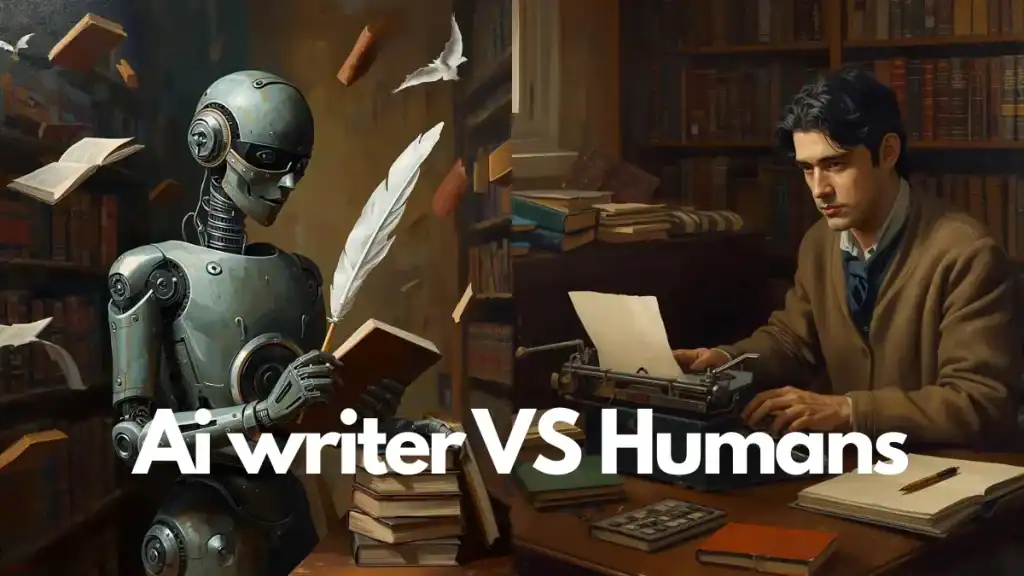

Let’s be real for a second. If you’ve scrolled through news sites, marketing emails, or even product descriptions lately, you’ve probably read something written by an AI. And you might not have even noticed. The line between human and machine-generated text is blurring faster than ever. Tools like ChatGPT, Claude, and Gemini aren’t just fancy parrots anymore; they’re producing coherent, convincing, and sometimes even creative content at a scale and speed no human can match. So, the question isn’t really if AI is beating humans in some writing tasks—it already is. The real, spine-tingling question is: By 2026, will AI beat humans at writing… altogether?
The Areas Where AI Already Has the Upper Hand
First, let’s look at the current scoreboard. AI isn’t winning the whole game, but it’s dominating specific quarters.
Volume and Speed: This is the no-contest category. Need 100 SEO-optimized blog post drafts by tomorrow? A human team would crumble. An AI, fueled by enough computing power, will deliver in hours. For formulaic content—think basic news summaries, straightforward product listings, or simple social media posts—AI is often “good enough” and impossibly efficient.
Data Synthesis: Ask an AI to write a report comparing the latest smartphone models, pulling in specs, prices, and review scores from across the web. It will do it in seconds, creating a well-structured, factual overview. A human would spend hours on research alone. For turning complex data into clear prose, AI is a powerhouse.
Overcoming the Blank Page: Writer’s block doesn’t exist in the silicon world. AI is the ultimate brainstorming partner and first-draft generator. It can provide ten different opening paragraphs, suggest outlines, and generate ideas from a single prompt, giving human writers a massive head start.
The Human Fortress (For Now): Where We Still Shine
Before we panic, let’s acknowledge what makes human writing truly irreplaceable—so far.
The Soul Stuff: Authentic voice, raw emotion, deep personal experience, and unique wit. An AI can mimic a style, but can it replicate the palpable anger in a protest piece, the aching vulnerability in a personal essay, or the subtle, inside-joke humor of a niche community? This connection—born from lived experience—is our stronghold.
Strategic Brilliance and Nuance: Writing isn’t just putting words in order; it’s a strategic act. It’s knowing exactly what to say, what to omit, and how to frame an argument to persuade a specific CEO in a high-stakes proposal. It’s understanding cultural nuance, subtext, and the unspoken rules of a genre in a way that AI, trained on existing data, struggles to innovate beyond.
The “Why” Behind the Words: Great writing serves a deep purpose beyond the task. It builds trust, fosters community, and challenges the status quo. An AI can write a compelling ad, but can it build a brand’s authentic legacy through storytelling over decades? That requires a human vision.
2026: The Tipping Point or Just Another Step?
So, what happens in the next two years? We won’t see a sudden, sci-fi-style takeover. Instead, we’ll see the lines blur further in key areas:
1. The “Good Enough” Zone Will Expand. More types of writing will fall into the category where AI output is considered perfectly acceptable. Think mid-level marketing copy, generic business communications, and standardized educational content. The economic pressure will be immense.
2. The Hybrid Model Will Become Standard. The future isn’t AI vs. Human. It’s AI + Human. The most successful writers will be “AI Editors” or “Creative Directors”—using AI as a super-powered tool for ideation and drafting, then applying their human skills for voice, nuance, strategy, and emotional punch. The job description changes, but the creative core remains.
3. The True Test: Original Thought. The biggest hurdle for AI by 2026 will be genuine originality and groundbreaking thought leadership. Can an AI, which predicts the next word based on patterns, produce a philosophical concept or narrative structure that truly reshapes how we think? This is humanity’s final boss level, and it’s unlikely to fall by 2026.
The Verdict: Who Wins in 2026?
AI will “beat” humans in more and more tasks—especially those defined by volume, data, and formula. The economic landscape for writers will shift dramatically.
But will AI beat humans at the art and craft of writing? The soulful, strategic, and culturally transformative part? Not by 2026. Probably not for a long time after.
The real challenge for humans won’t be competing with AI’s typing speed. It will be doubling down on what makes us uniquely human. The writers who thrive will be those who master the collaboration, who use AI to handle the heavy lifting so they can focus on the high-value work of connection, insight, and originality. The game isn’t over. The rules are just changing.



The author avoids hysteria. AI won’t replace all writing by 2026, but it’ll dominate formulaic, high-volume tasks. That’s already happening.